SFS successfully held a parallel session of the Silk Road International Autumn Symposium for Distinguished Young Scholars at iHarbour on the afternoon of November 1, 2025. The session included academic presentations delivered by Dr. Liu Xia, a musicology graduate from the University of Cologne, and Dr. Li Lu, a graduate in interpreting studies from Queen's University Belfast.
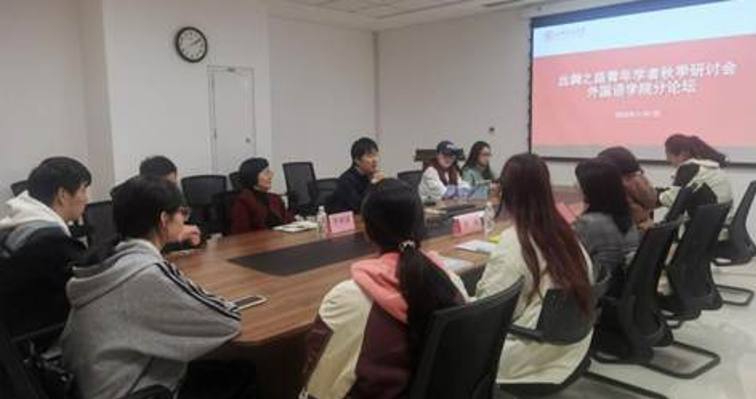
Dr. Liu Xia presented on "Cross-Cultural Reception of German and Austrian Classical Music", sharing her research on Sino-German music exchange and the translation of German art songs. She introduced a three-dimensional framework of literary, musical, and cultural adaptation for translating and adapting German and Austrian art songs, such as The Wild Rose in modern China. She also traced the reception of Mozart's music in China from the early 20th century to 1949, identifying shifts in key agents, geographic centers, and symbolic functions.
Dr. Li Lu's lecture, titled "The Interpreter's Brain at Work: Cognitive Load and Disfluency in Interpretation", examined cognitive challenges in consecutive interpreting. Drawing on eye-tracking data, she identified note-reading as a major source of cognitive load that often leads to prolonged pauses. Over-reliance on notes, she noted, can reduce the cognitive resources available for deeper semantic processing, resulting in more filled pauses. Her findings suggest that disfluency patterns can serve as indicators of cognitive load, offering practical insights for interpreting training.
The forum concluded with a discussion on the pedagogical applications of the research, particularly in helping MTI students manage cognitive resources more effectively under high-demand conditions and thereby improve the fluency and accuracy of their interpreting output. The event underscored the innovative research contributions of emerging scholars and reinforced SFS's commitment to fostering international academic exchange in support of talent development and disciplinary advancement.


