The national finals of the 5th "SFLEP · VocabGo Cup" National English Vocabulary Contest recently concluded, with XJTU students achieving remarkable results. Zhan Tianyi from XJTU's School of Electrical Engineering won the national first prize, while Lin Yuxiang from the School of Mathematics and Statistics claimed the national second prize.
Co-hosted by the Research Center for Foreign Language Strategies, China Foreign Language Teaching Materials and Methods Research Center, and Shanghai Foreign Language Education Press, the competition was listed in the 2023 National College Student Competition Analysis Report observation catalog in March 2023, making it the only vocabulary-focused event on the list. The competition unfolded in three stages: campus trials, provincial competitions, and national finals. With active promotion by the SFS Competition Base, the College English Teaching Center, and the English Department, 387 students registered for the campus round. After the contest, 23 of them advanced to the provincial stage, where 19 won awards—including 3 special prizes and 5 first prizes. Zhan Tianyi, who ranked first among provincial special prize winners, joined 7 other contestants in the national finals and delivered outstanding performances.
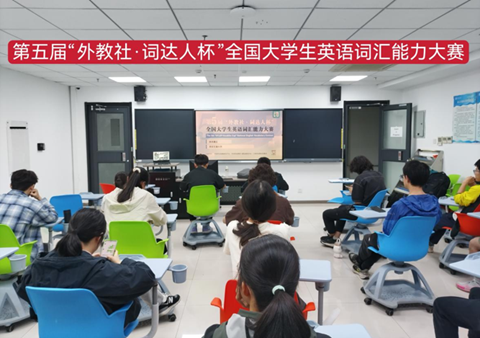
Held online via the "VocabGo" intelligent vocabulary learning platform, the competition aims to promote in-depth study of Xi Jinping Thought on Socialism with Chinese Characteristics in a New Era, implement the spirit of the 20th National Congress of the CPC, and promote fine traditional Chinese culture. By innovating English vocabulary learning and testing methods, it meets the needs of online college English teaching and raises the standards of intelligent teaching. Relying on SFS's competition-focused teaching organizations, XJTU provided contestants with preparation resources, professional coaching, and organizational support. Adhering to the philosophy of "learning through practice" and "learning through competition," the university advances the integrated development of curriculum teaching, technological empowerment, and competition-based practice. This has created multi-dimensional learning environment that integrates intelligent platform-based vocabulary study, red classics reading in English language, and English teaching, actively implementing a new model of "digital-empowered" foreign language education and practice.


